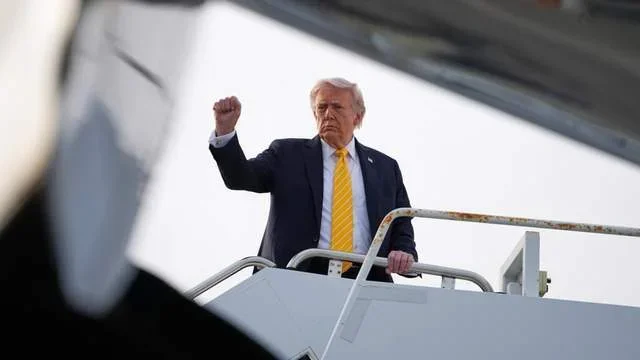

Trump embarked on his trip to China today, but the composition of his accompanying business delegation has generated more intrigue than the visit itself—particularly the names that are missing from the roster.
According to Bloomberg, citing White House officials, the list of corporate leaders accompanying Trump reads like a who’s who of American industry: Tesla’s Elon Musk, Apple’s Tim Cook, Boeing’s Kelly Ortberg, Goldman Sachs’ David Solomon, Blackstone’s Stephen Schwarzman, BlackRock’s Larry Fink, Citigroup’s Jane Fraser, Meta’s Andrew Bosworth, alongside CEOs from General Electric, Cargill, Micron, Qualcomm, and more. Nearly every heavyweight from finance, tech, aerospace, and agriculture made the cut.
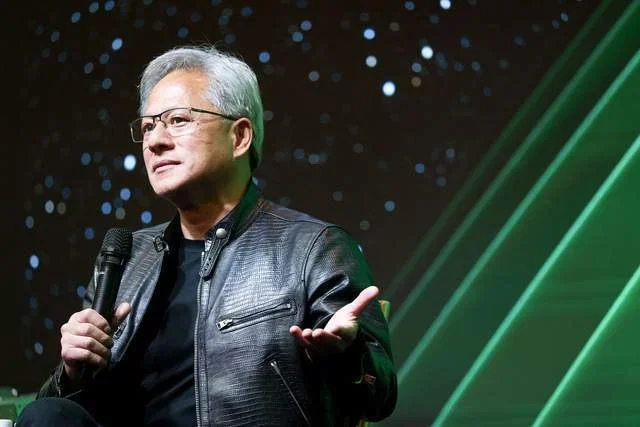
Yet two glaring omissions have drawn the most attention: Nvidia CEO Jensen Huang and Secretary of State Marco Rubio.
Start with Huang. Reports had long circulated that he would be part of the delegation. In an interview with CNBC last week, he openly stated, “If invited, I’ll go.” But the official list tells a different story. Bloomberg’s analysis cuts to the chase: his absence signals a setback in Nvidia’s efforts to push AI chip exports to China amid heightened political scrutiny.
This ties back to what some have called the “Washington Rashomon.” The Trump administration had previously greenlit Nvidia’s export of H200 chips to China, but Democrats have kept up pressure. Senator Coons even sent a formal letter to the Commerce Secretary demanding clarity on whether the export actually went through—creating a political minefield. For Huang to land in Beijing alongside Trump would hand ammunition to critics: “See, the president is personally escorting chip sales to China.” So his absence isn’t about unwillingness—it’s about avoiding further complication for Trump. Business acumen meets political reality.
Rubio’s absence is equally telling. It’s highly unusual for a secretary of state not to accompany the president on a major foreign trip. But given Rubio’s history as a senator pushing controversial bills on Taiwan and Hong Kong—leading to his inclusion on China’s sanctions list—his no-show makes sense. The sanctions remain in place. Trying to engage with Beijing on trade, Iran, or global stability while being a sanctioned figure would be a diplomatic headache for both sides. Better to simply stay home.
A key detail: the delegation’s core members include Treasury Secretary Bessent and White House economic advisors, alongside business leaders. This suggests the White House knows the deeper geopolitical friction is too hot to handle for now—so it’s focusing on the more manageable track of economic deals.
But the two high-profile absences are themselves signals. Huang’s absence underscores the internal U.S. rift over tech policy toward China: a desire to profit from chip sales versus fear of domestic political backlash. Rubio’s absence exposes the deep-seated tensions in diplomatic and security ties—when even the secretary of state can’t cross the threshold of sanctions, high-level dialogue remains fragmented.
Zoom out, and this is a microcosm of Trump’s visit. On the surface, it’s a signing ceremony for big-ticket business deals. Beneath, it’s a tangle of political landmines. Bringing a squad of CEOs to talk commerce is one thing—untangling the knot of chip export disputes, South China Sea red lines, and Iran nuclear impasses in a single visit is quite another.
Trump hopes to finalize several major commercial agreements, possibly even hammer out details of a U.S.-China trade commission. But whether that vision materializes depends less on how many executives he brings and more on whether he can address the hard issues that truly define the relationship.
A delegation list is never just a list. It’s a mirror reflecting where U.S.-China relations are warm, where they’re cold, and where the minefields lie.